Speakers and Minicourses

Serte Donderwinkel
University of GroningenLocal convergence of random graphs: how to see a giant through a microscope?


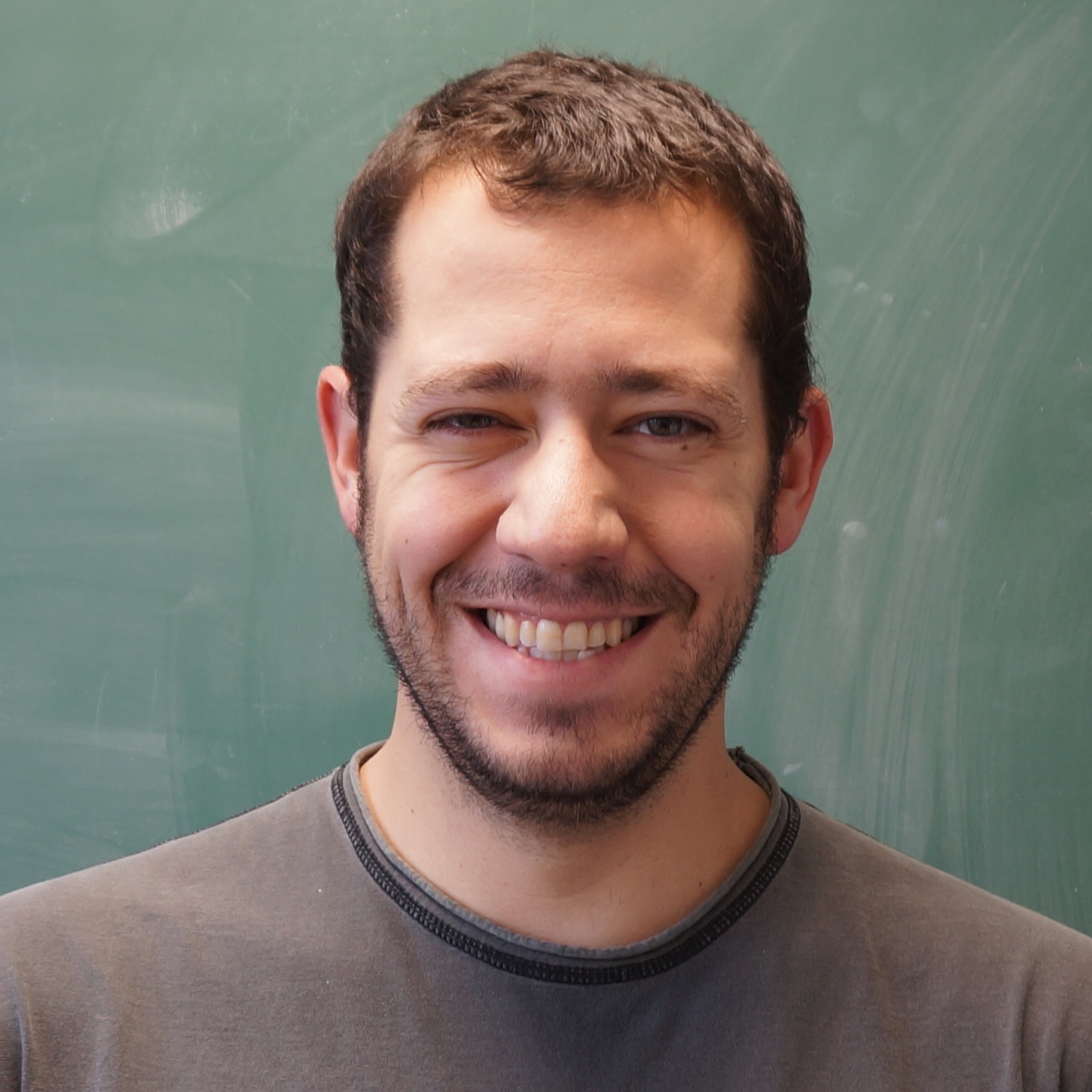
Guillem Perarnau
Universitat Politècnica de CatalunyaDistances in random bipartite plane maps and random trees with given degree sequences
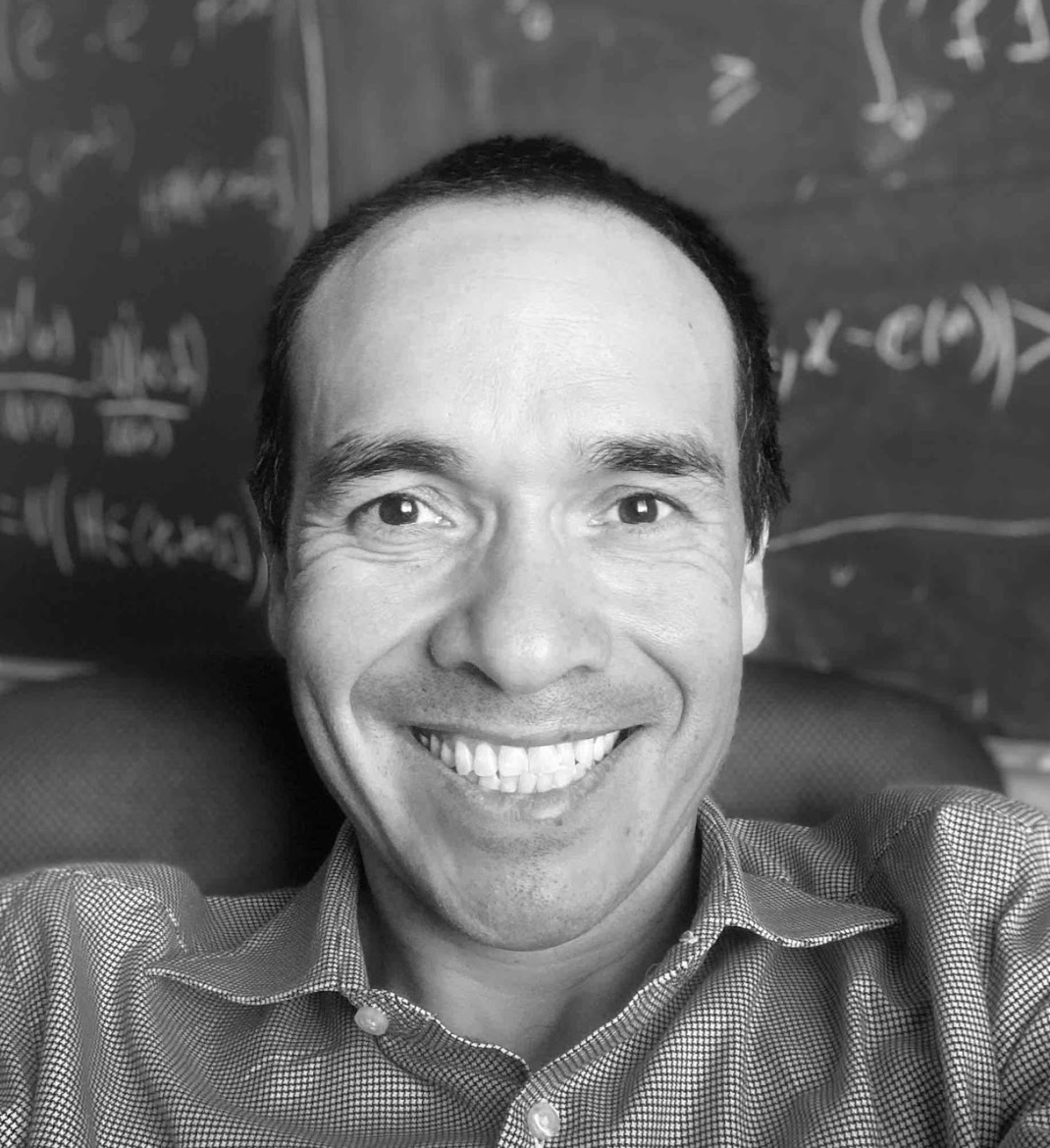
Venue
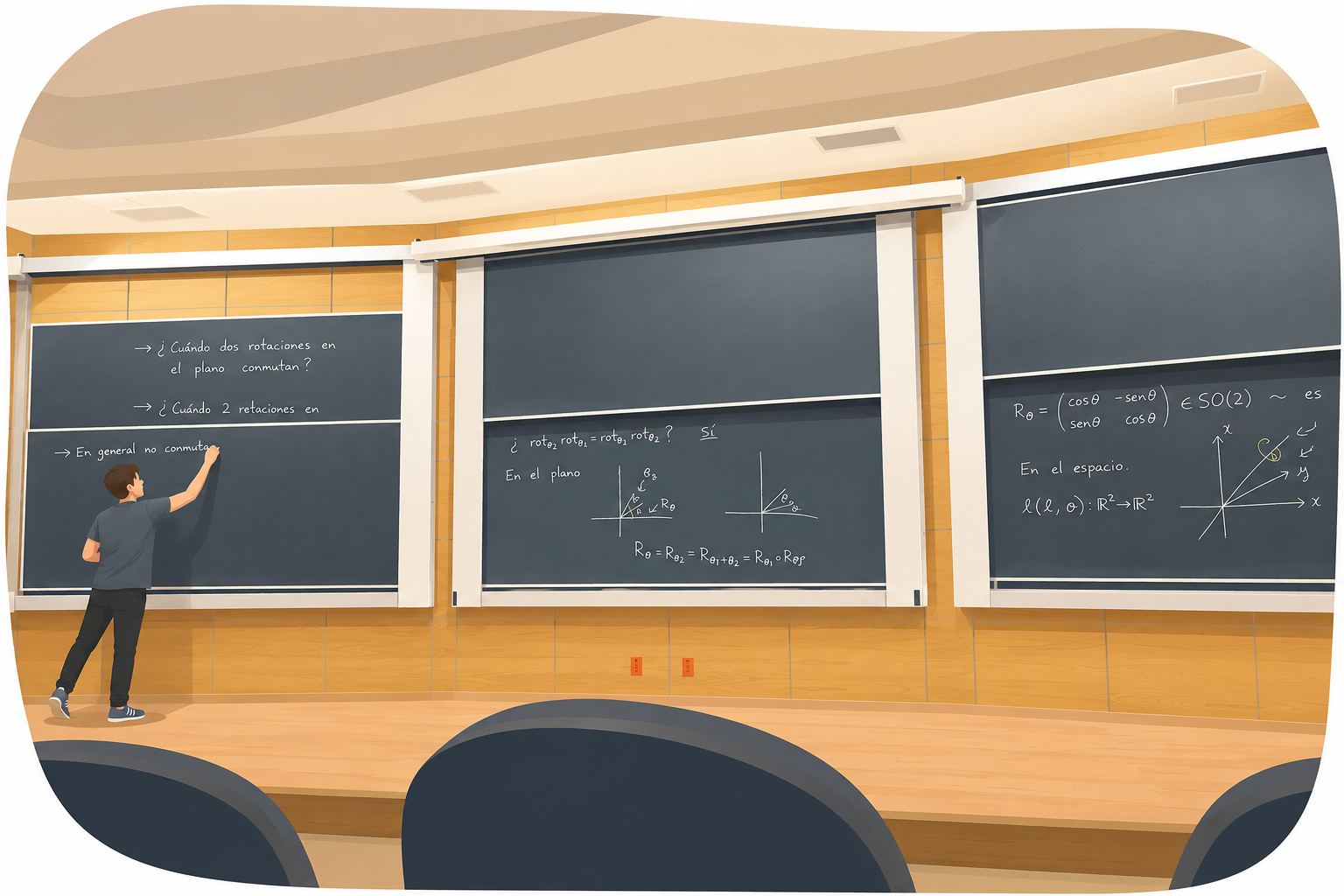
Alfonso Nápoles Gándara Auditorium.
Instituto de Matemáticas, Universidad Nacional Autónoma de México
Área de la Investigación Científica, Circuito Exterior, C.U., Coyoacán, 04510 Ciudad de México, CDMX
Schedule
Student Satellite Workshop — September 28 – October 2, 2026
Mini-courses take place from 9:30 a.m. to 1:00 p.m.
| Time | MondaySept 28 | TuesdaySept 29 | WednesdaySept 30 | ThursdayOct 1 | FridayOct 2 |
|---|---|---|---|---|---|
| 9:00–9:30 | Registration | ||||
| 9:30–10:30 | Course 1Guillem Perarnau | Course 4Víctor Rivero | Course 3Bas Lodewijks | Course 4Víctor Rivero | Course 4Víctor Rivero |
| 10:30–11:30 | Course 2Serte Donderwinkel | Course 1Guillem Perarnau | Course 2Serte Donderwinkel | Course 3Bas Lodewijks | Course 2Serte Donderwinkel |
| 11:30–12:00 | Break | ||||
| 12:00–13:00 | Course 3Bas Lodewijks | Course 5Christina Goldschmidt | Course 5Christina Goldschmidt | Course 1Guillem Perarnau | Course 5Christina Goldschmidt |
| 13:00–15:00 | Lunch | ||||
| 15:00–15:20 | Meet up | Working session | Working session | Talks 2 | |
| 15:20–15:40 | Talks 1 | ||||
| 15:40–16:00 | Break | ||||
| 16:00–16:20 | Break | Break | APT session | Working session | |
| 16:20–17:00 | Working session | Working session | |||
| 17:00–18:00 | Final Reports | ||||
Scroll horizontally to see all days.
Abstracts
Click a mini-course to read its abstract.
This minicourse provides the background for the proposed open problem on the diameter of random bipartite planar maps with given face degrees. We will first introduce planar maps and some basic bijections, with a focus on bijections between planar maps and "decorated trees" that allow distances in the map to be studied through the tree.
We will begin with the CVS (Cori-Vauquelin-Schaeffer) bijection between pointed quadrangulations and well-labelled plane trees. We will present the bijection in detail and discuss two applications: the enumeration of planar maps, leading to Tutte’s formula, and a typical graph distance scaling of order n1/4 for uniform random planar quadrangulations with n faces.
We will then move to bipartite maps with general face degrees. We will present a composite bijection arising from combining the BDG (Bouttier-Di Francesco-Guitter) and the JS (Janson-Stefánsson) bijections. This connects pointed bipartite planar maps directly to bridge-labeled plane trees while preserving degree correspondences.
Distances can then be studied using a line-breaking construction for Cayley trees with given vertex degrees, due to Foata and Fuchs. As an application, we will recover the previous bound for typical distances in random planar quadrangulations. The main advantage of this alternative approach is that it also applies to arbitrary sequences of even face degrees, directly leading to our open problem.
There are many popular and well-studied models of randomly grown trees, such as binary search trees, preferential attachment trees, and uniform attachment trees. Though different in some ways, many of these tree models share that their depth (also often called the height), the largest distance from the root to a leaf, grows as the logarithm of the number of vertices in the tree.
In this mini-course we will investigate a more recently introduced model of randomly growing trees called depth-weighted trees. In this model, given a function f, vertices are added to the tree one-by-one, where the probability of a new vertex to connect to an existing vertex v is proportional to f(depth of v), where the depth of v is the distance of v to the root. Depending on the choice of the function f, the depth of the tree can grow logarithmically or much slower/faster than logarithmically. We will study some general tools to study depth-weighted trees, and uncover the growth rate of the depth of the tree for different families of functions f.
Consider a finite connected graph, and pick one of its spanning trees uniformly at random. What are the properties of the resulting random tree, and how do they depend on the underlying graph? These questions have been explored in great detail by probabilists over the last 30 years. The purpose of this mini-course is to give an introduction to uniform spanning trees (USTs), including two beautiful algorithms, both based on random walks, which can be used to generate them. We will investigate what happens in the special case that the underlying graph is the complete graph on n vertices, as n tends to infinity, and then focus in on graphs whose USTs closely resemble that of the complete graph on n vertices, in the sense of having the same scaling limit. These graphs are all, in some sense, high-dimensional. In the final part of the mini-course, we will think about the situation where the underlying graph is the largest component of an Erdos-Renyi random graph, G(n,p), in different ranges of p. Our understanding of the behaviour of the UST here is incomplete (and the subject of my open problem!); I will describe some structural results for the graph which should help to make progress here.
Registration
Attendance to the mini-courses is open to everyone. To help us plan accordingly, please register using the form below. We look forward to seeing you there!
Student Satellite Workshop
These minicourses are part of a program designed for graduate students to explore open problems through small-group collaboration with peers and leading researchers. Each small-group is led by a mini-course speaker.
Applications for the research program have closed, but everyone is welcome to the minicourses.
Research Program Structure
The student satellite workshop is structured in four components:
- 1. A warm-up online component, designed to help participants get acquainted with the problems
- 2. An in-person student workshop at Ciudad Universitaria, UNAM (Mexico City, Mexico)
- 3. The BIRS workshop at Casa Matemática Oaxaca (Oaxaca, Mexico)
- 4. An online follow-up component, with the goal of advancing and completing the projects
The event at Casa Matemática Oaxaca corresponds to the BIRS workshop “Discrete and Continuous Random Trees”, where additional invited researchers will join the program.
Main Events
Discrete and Continuous Random Trees — Student Satellite Workshop
- Dates: September 28 – October 2, 2026
- Location: Instituto de Matemáticas & IIMAS, UNAM — Ciudad Universitaria, Mexico City
BIRS Workshop: Discrete and Continuous Random Trees
- Dates: October 4 – 9, 2026
- Location: Casa Matemática Oaxaca, Oaxaca, Mexico
Frequently Asked Questions
I'm not taking part in the student satellite workshop. Can I still attend the minicourses?
Yes! To help us keep track of the expected number of participants, please register using this form.
Can I receive funding?
We can provide accommodation only for student satellite workshop participants. Unfortunately, we are currently unable to offer additional travel support.
What is the student satellite workshop like? How does it differ from a typical workshop?
This program is designed to differ from a traditional workshop: rather than centering on lectures, it emphasizes collaboration and active participation. This format is well-established and has proven successful in similar settings. The workshop draws on the structure of initiatives such as the Mathematical Research Communities organized by the American Mathematical Society, the Workshop and Summer School on Random Graphs (RandNET) held in Eindhoven in August 2022, and the Mathematical Foundations of Network Models and Their Applications – Research School held in Chennai in December 2024.
I am attending the student satellite workshop. What is the time commitment?
Selected participants are expected to attend both in-person workshops: in Mexico City (September 28–October 2) and in Oaxaca (October 4–9, 2026). Before the workshops begin, everyone will take part in a kick-off meeting where group leaders introduce the proposed problems and participants choose their groups. Between the kick-off and the first workshop, participants should spend some time familiarizing themselves with their problem and its prerequisites — a few hours per week should be enough.
I am attending the student satellite workshop. How do I travel between Mexico City and Oaxaca?
There are several transportation options between Mexico City and Oaxaca, including affordable alternatives that can help reduce travel costs. Once the list of participants is finalized, we may also help coordinate group travel.
Inclusion and Code of Conduct
We refuse to compromise the ideals of academic freedom and open exchange. We affirm that scientific events must be open to everybody, regardless of background or identity.
We are dedicated to providing a supportive, inclusive, and safe environment for all participants, ensuring that everyone is treated with dignity and respect. By participating in this program, all participants agree to uphold these principles.
Our goal is to create a space where all participants feel safe to share their ideas, confident that they will be heard and valued, and encouraged to push the boundaries of mathematics.
Organizing Committee

Louigi Addario-Berry
McGill University
Omer Angel
University of British Columbia
Laura Eslava
IIMAS - UNAM
Saraí Hernández-Torres
Instituto de Matemáticas - UNAMContact
randomtrees@im.unam.mx